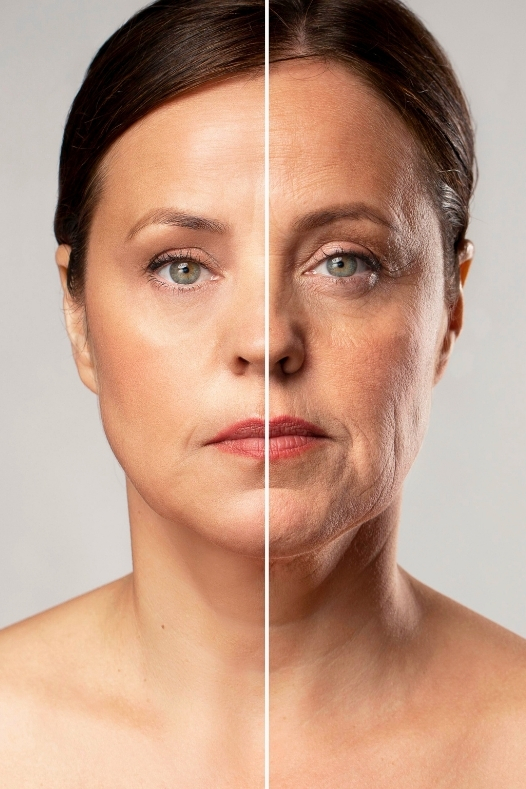
Deep Plane Facelift
What is a Deep Plane Facelift ( Facelift Antalya )?
A deep plane facelift Antalya is an advanced facial rejuvenation procedure that targets the underlying causes of facial aging. Unlike traditional facelift techniques that primarily focus on skin tightening, this approach repositions deeper facial structures, including the SMAS layer and underlying soft tissues, to achieve a natural and long-lasting rejuvenation.
Anatomical Basis of Facial Aging
Facial aging is a complex process involving skin laxity, gravitational descent of soft tissues, volume loss in fat compartments, and skeletal changes. The deep plane facelift addresses these changes at their anatomical origin rather than masking them with superficial tightening.
How Is a Deep Plane Facelift ( Facelift Antalya ) Performed?
During the procedure, the surgeon works within the deep facial planes to mobilize the cheek, midface, and jawline tissues as a single unit. These tissues are then repositioned to their youthful anatomical location. This technique allows for:
Restoration of midface volume
Softening of nasolabial folds
Improved jawline definition
A smoother transition between the face and neck
Ideal Candidates for a Deep Plane Facelift
This procedure is particularly suitable for patients who:
Have moderate to advanced facial sagging
Experience midface and jawline descent
Desire natural-looking, long-lasting results
Have undergone previous facelift surgery with recurrent sagging
Advantages of Deep Plane Facelift Antalya
Natural facial expression without an over-tightened appearance
Long-lasting rejuvenation
Comprehensive correction of mid and lower facial aging
Reduced tension on the skin surface
Recovery Process
Postoperative swelling and bruising are common in the early stages. Most patients can return to social activities within 2–3 weeks. Final results typically become apparent within 3–6 months as tissues fully settle.
Deep Plane Facelift vs. Traditional Facelift
Compared to traditional facelift techniques, the deep plane facelift offers a more comprehensive and anatomically driven approach. By addressing deeper facial structures, it provides more durable and natural aesthetic outcomes.
Deep Plane Facelift Cost in Turkey Antalya
Let’s talk about the difference.
In countries such as the United States and Western Europe, undergoing a deep plane facelift often involves a significant financial commitment — along with additional costs for hospital stay, medications, and post-operative care.
It is also common for patients to wait weeks or even months before securing a consultation.
So what makes Turkey different?
In Turkey, the same advanced surgical techniques are performed in modern medical environments, following internationally accepted standards.
The key difference lies not in the quality — but in the healthcare structure itself.
Lower operational costs, more efficient systems, and a strong focus on international patients allow experienced surgeons to provide highly specialized procedures with greater accessibility and shorter waiting times


